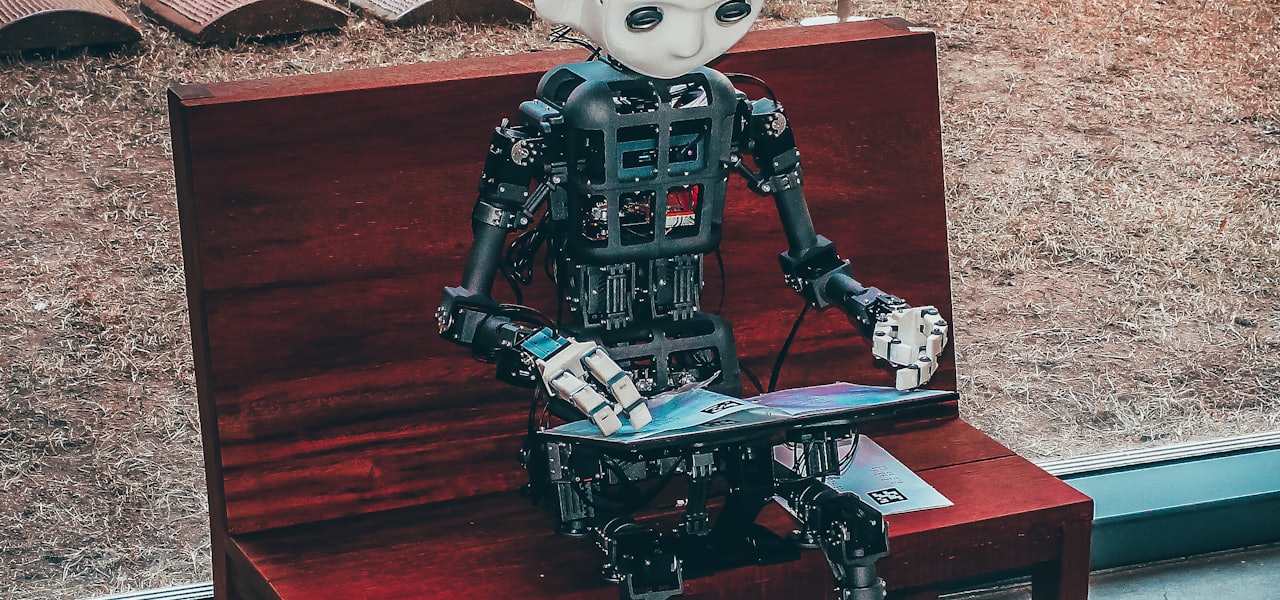
AI Avatar Real

AI Avatar Real — independent reviews, comparisons, pricing and step-by-step guides on Aizhi.

  • Light scanning photomacrography

    Light scanning photomacrography

    Light Scanning Photomacrography (LSP), also known as Scanning Light Photomacrography (SLP) or Deep-Field Photomacrography, is a photographic film technique that allows for high magnification light imaging with exceptional depth of field (DOF). This method overcomes the limitations of conventional macro photography, which typically only keeps a portion of the subject in acceptable focus at high magnifications. == Historical background == The principles of LSP were first documented in the early 1960s by Dan McLachlan Jr., who highlighted its capability for extreme focal depth in microscopy and in 1968 patented the process. The technique was revived and further developed in the 1980s by photographers such as Darwin Dale and Nile Root, a faculty member at the Rochester Institute of Technology. In the early 1990s, William Sharp and Charles Kazilek, both researchers at Arizona State University, also published articles describing their technique and system setup for capturing SLP images. == Predecessor to stack image photography == Light Scanning Photomacrography offered a powerful analog tool for high-detail imaging in the age of film photography. It provided a comprehensive depth of field, making it invaluable in scientific and biomedical photography. As technology and techniques continue to evolve, LSP has been replaced by digital image focus stacking. This technique uses a collection of images captured in series at different focal depths, which are then processed using computer software to create a single image with a greater focus depth than any single image. == LSP technique and results == LSP involves the use of a thin plane of light that scans across the subject, which is mounted on a stage moving perpendicular to the film plane. The technique utilizes traditional optics and is governed by the physical laws of depth of field. By moving the subject through a narrow band of illumination, the entire subject can be recorded in sharp focus from the nearest details to the farthest ones. This analog process produces sharp and detailed images by slowly recording the image on film as the specimen passes through the sheet of light that is thinner than the effective DOF. Because the image is captured at the same relative distance from the camera lens, the resulting images are axonometric rather than perspective projection, which is what the human eye sees and is typically captured by a film camera. Because all parts of an LSP image are captured at the same distance from the lens, relative measurements can be taken from an LSP photograph and can be used for comparison. == Equipment and setup == A typical LSP setup includes: A stage that can move the subject perpendicular to the film plane. Light sources, in some cases modified projectors, are used to project a thin plane of light. A camera mounted on a stable stand such as a tabletop copy stand. In 1991, Sharp and Kazilek described their SLP system that used three Kodak Ektagraphic slide projectors with zoom lenses to create a thin plane of light. The projectors each had a slide mount with two razor blades placed edge-to-edge to create a thin slit for the light to pass through. The image was captured using a Nikon FE-2 SLR camera mounted above the specimen. Kodachrome 25 slide film was used to record the image and to minimize film grain size and maximize image sharpness == Commercial systems == A commercial SLP instrument was produced by the Irvine Optical Corp. Their DYNAPHOT system was based on a photomacroscope and could capture images on 4x5 film. The instrument came with two or three illumination sources and a motorized specimen stage. The system advertised a 2X – 40X magnification range and the ability to capture images in black and white and color. Other systems have been developed by Nile Root and Theodore Clarke and reported higher magnification (up to 100X). == LSP process == Alignment and Focusing: The light sources are aligned and focused to project a thin, consistent plane of light across the subject. Stage Movement: The subject stage moves at a controlled speed, scanning through the plane of light. Image Capture: The camera shutter is set to a long exposure or can be opened and closed manually. As the subject moves through the illuminated plane, it is recorded on the film. This process is very much like painting an image onto the film using photons instead of paint. == Applications == LSP was particularly useful in biomedical photography, where it was used to document magnified subjects with increased depth of field over traditional macro and micro photography. It has been employed to capture detailed images of biological specimens, such as imaging small insects and their parts. SLP has been used to document shell collections for scientific documentation and research. Other applications include forensic science, mineralogy, and the imaging of fractured surfaces and parts == Advantages and challenges of LSP imaging == === Advantages === Exceptional depth of field: Subjects are rendered in sharp focus throughout. High magnification: Detailed images at significant magnification without sacrificing DOF. Analog precision: Provides a non-digital solution with accurate image representation. Versatility: Can be used for a range of subject sizes, from macro to non-macro scales. === Challenges === Technical complexity: Requires precise setup and alignment. Exposure time: Typically requires long exposure times due to the scanning process. Contrast control: The highly directional lighting can create harsh shadows and high contrast, which may need to be managed. Digital competition: Focus stacking has largely replaced LSP in the digital era due to convenience and flexibility. == DIY contributions == Enthusiasts and researchers have contributed to the development and accessibility of LSP by creating and sharing DIY guides. These contributions have enabled others to build their own LSP systems using readily available materials and components. Nile Root's publications provide detailed instructions and recommendations for constructing an LSP setup. These DIY systems have allowed a wider audience to explore and utilize the benefits of LSP imaging in various fields.

    Read more →
  • Materials informatics

    Materials informatics

    Materials informatics is a field of study that applies the principles of informatics and data science to materials science and engineering to improve the understanding, use, selection, development, and discovery of materials. The term "materials informatics" is frequently used interchangeably with "data science", "machine learning", and "artificial intelligence" by the community. This is an emerging field, with a goal to achieve high-speed and robust acquisition, management, analysis, and dissemination of diverse materials data with the goal of greatly reducing the time and risk required to develop, produce, and deploy new materials, which generally takes longer than 20 years. This field of endeavor is not limited to some traditional understandings of the relationship between materials and information. Some more narrow interpretations include combinatorial chemistry, process modeling, materials databases, materials data management, and product life cycle management. Materials informatics is at the convergence of these concepts, but also transcends them and has the potential to achieve greater insights and deeper understanding by applying lessons learned from data gathered on one type of material to others. By gathering appropriate meta data, the value of each individual data point can be greatly expanded. == Databases == Databases are essential for any informatics research and applications. In material informatics many databases exist containing both empirical data obtained experimentally, and theoretical data obtained computationally. Big data that can be used for machine learning is particularly difficult to obtain for experimental data due to the lack of a standard for reporting data and the variability in the experimental environment. This lack of big data has led to growing effort in developing machine learning techniques that utilize data extremely data sets. On the other hand, large uniform database of theoretical density functional theory (DFT) calculations exists. These databases have proven their utility in high-throughput material screening and discovery. Some common DFT databases and high throughput tools are listed below: Databases: MaterialsProject.org, MaterialsWeb.org (University of Florida) HT software: Pymatgen, MPInterfaces, Matminer == Beyond computational methods? == The concept of materials informatics is addressed by the Materials Research Society. For example, materials informatics was the theme of the December 2006 issue of the MRS Bulletin. The issue was guest-edited by John Rodgers of Innovative Materials, Inc., and David Cebon of Cambridge University, who described the "high payoff for developing methodologies that will accelerate the insertion of materials, thereby saving millions of investment dollars." The editors focused on the limited definition of materials informatics as primarily focused on computational methods to process and interpret data. They stated that "specialized informatics tools for data capture, management, analysis, and dissemination" and "advances in computing power, coupled with computational modeling and simulation and materials properties databases" will enable such accelerated insertion of materials. A broader definition of materials informatics goes beyond the use of computational methods to carry out the same experimentation, viewing materials informatics as a framework in which a measurement or computation is one step in an information-based learning process that uses the power of a collective to achieve greater efficiency in exploration. When properly organized, this framework crosses materials boundaries to uncover fundamental knowledge of the basis of physical, mechanical, and engineering properties. == Challenges == While there are many who believe in the future of informatics in the materials development and scaling process, many challenges remain. Hill, et al., write that "Today, the materials community faces serious challenges to bringing about this data-accelerated research paradigm, including diversity of research areas within materials, lack of data standards, and missing incentives for sharing, among others. Nonetheless, the landscape is rapidly changing in ways that should benefit the entire materials research enterprise." This remaining tension between traditional materials development methodologies and the use of more computationally, machine learning, and analytics approaches will likely exist for some time as the materials industry overcomes some of the cultural barriers necessary to fully embrace such new ways of thinking. == Analogy from Biology == The overarching goals of bioinformatics and systems biology may provide a useful analogy. Andrew Murray of Harvard University expresses the hope that such an approach "will save us from the era of "one graduate student, one gene, one PhD". Similarly, the goal of materials informatics is to save us from one graduate student, one alloy, one PhD. Such goals will require more sophisticated strategies and research paradigms than applying data-science methods to the same tasks set currently undertaken by students.

    Read more →
  • Tagsistant

    Tagsistant

    Tagsistant is a semantic file system for the Linux kernel, written in C and based on FUSE. Unlike traditional file systems that use hierarchies of directories to locate objects, Tagsistant introduces the concept of tags. == Design and differences with hierarchical file systems == In computing, a file system is a type of data store which could be used to store, retrieve and update files. Each file can be uniquely located by its path. The user must know the path in advance to access a file and the path does not necessarily include any information about the content of the file. Tagsistant uses a complementary approach based on tags. The user can create a set of tags and apply those tags to files, directories and other objects (devices, pipes, ...). The user can then search all the objects that match a subset of tags, called a query. This kind of approach is well suited for managing user contents like pictures, audio recordings, movies and text documents but is incompatible with system files (like libraries, commands and configurations) where the univocity of the path is a security requirement to prevent the access to a wrong content. == The tags/ directory == A Tagsistant file system features four main directories: archive/ relations/ stats/ tags/ Tags are created as sub directories of the tags/ directory and can be used in queries complying to this syntax: tags/subquery/[+/subquery/[+/subquery/]]/@/ where a subquery is an unlimited list of tags, concatenated as directories: tag1/tag2/tag3/.../tagN/ The portion of a path delimited by tags/ and @/ is the actual query. The +/ operator joins the results of different sub-queries in one single list. The @/ operator ends the query. To be returned as a result of the following query: tags/t1/t2/+/t1/t4/@/ an object must be tagged as both t1/ and t2/ or as both t1/ and t4/. Any object tagged as t2/ or t4/, but not as t1/ will not be retrieved. The query syntax deliberately violates the POSIX file system semantics by allowing a path token to be a descendant of itself, like in tags/t1/t2/+/t1/t4/@ where t1/ appears twice. As a consequence a recursive scan of a Tagsistant file system will exit with an error or endlessly loop, as done by Unix find: This drawback is balanced by the possibility to list the tags inside a query in any order. The query tags/t1/t2/@/ is completely equivalent to tags/t2/t1/@/ and tags/t1/+/t2/t3/@/ is equivalent to tags/t2/t3/+/t1/@/. The @/ element has the precise purpose of restoring the POSIX semantics: the path tags/t1/@/directory/ refers to a traditional directory and a recursive scan of this path will properly perform. == The reasoner and the relations/ directory == Tagsistant features a simple reasoner which expands the results of a query by including objects tagged with related tags. A relation between two tags can be established inside the relations/ directory following a three level pattern: relations/tag1/rel/tag2/ The rel element can be includes or is_equivalent. To include the rock tag in the music tag, the Unix command mkdir can be used: mkdir -p relations/music/includes/rock The reasoner can recursively resolve relations, allowing the creation of complex structures: mkdir -p relations/music/includes/rock mkdir -p relations/rock/includes/hard_rock mkdir -p relations/rock/includes/grunge mkdir -p relations/rock/includes/heavy_metal mkdir -p relations/heavy_metal/includes/speed_metal The web of relations created inside the relations/ directory constitutes a basic form of ontology. == Autotagging plugins == Tagsistant features an autotagging plugin stack which gets called when a file or a symlink is written. Each plugin is called if its declared MIME type matches The list of working plugins released with Tagsistant 0.6 is limited to: text/html: tags the file with each word in and <keywords> elements and with document, webpage and html too image/jpeg: tags the file with each Exif tag == The repository == Each Tagsistant file system has a corresponding repository containing an archive/ directory where the objects are actually saved and a tags.sql file holding tagging information as an SQLite database. If the MySQL database engine was specified with the --db argument, the tags.sql file will be empty. Another file named repository.ini is a GLib ini store with the repository configuration. Tagsistant 0.6 is compatible with the MySQL and Sqlite dialects of SQL for tag reasoning and tagging resolution. While porting its logic to other SQL dialects is possible, differences in basic constructs (especially the INTERSECT SQL keyword) must be considered. == The archive/ and stats/ directories == The archive/ directory has been introduced to provide a quick way to access objects without using tags. Objects are listed with their inode number prefixed. The stats/ directory features some read-only files containing usage statistics. A file configuration holds both compile time information and current repository configuration. == Main criticisms == It has been highlighted that relying on an external database to store tags and tagging information could cause the complete loss of metadata if the database gets corrupted. It has been highlighted that using a flat namespace tends to overcrowd the tags/ directory. This could be mitigated introducing triple tags.</p> <a href="https://se.aizhi.co/news/15e299982.html" class="read-more" title="Tagsistant">Read more →</a> </div> </article> </li> <li class="article-item"> <article class="article-card"> <a href="https://se.aizhi.co/news/861e299136.html" class="card-thumb-link" title="Birkhoff algorithm"><img class="card-thumb" src="https://se.aizhi.co/uploads/images/x.jpg" alt="Birkhoff algorithm" loading="lazy"></a> <div class="card-body"> <h2><a href="https://se.aizhi.co/news/861e299136.html" title="Birkhoff algorithm">Birkhoff algorithm</a></h2> <p class="article-excerpt">Birkhoff's algorithm (also called Birkhoff-von-Neumann algorithm) is an algorithm for decomposing a bistochastic matrix into a convex combination of permutation matrices. It was published by Garrett Birkhoff in 1946. It has many applications. One such application is for the problem of fair random assignment: given a randomized allocation of items, Birkhoff's algorithm can decompose it into a lottery on deterministic allocations. == Terminology == A bistochastic matrix (also called: doubly-stochastic) is a matrix in which all elements are greater than or equal to 0 and the sum of the elements in each row and column equals 1. An example is the following 3-by-3 matrix: ( 0.2 0.3 0.5 0.6 0.2 0.2 0.2 0.5 0.3 ) {\displaystyle {\begin{pmatrix}0.2&0.3&0.5\\0.6&0.2&0.2\\0.2&0.5&0.3\end{pmatrix}}} A permutation matrix is a special case of a bistochastic matrix, in which each element is either 0 or 1 (so there is exactly one "1" in each row and each column). An example is the following 3-by-3 matrix: ( 0 1 0 0 0 1 1 0 0 ) {\displaystyle {\begin{pmatrix}0&1&0\\0&0&1\\1&0&0\end{pmatrix}}} A Birkhoff decomposition (also called: Birkhoff-von-Neumann decomposition) of a bistochastic matrix is a presentation of it as a sum of permutation matrices with non-negative weights. For example, the above matrix can be presented as the following sum: 0.2 ( 0 1 0 0 0 1 1 0 0 ) + 0.2 ( 1 0 0 0 1 0 0 0 1 ) + 0.1 ( 0 1 0 1 0 0 0 0 1 ) + 0.5 ( 0 0 1 1 0 0 0 1 0 ) {\displaystyle 0.2{\begin{pmatrix}0&1&0\\0&0&1\\1&0&0\end{pmatrix}}+0.2{\begin{pmatrix}1&0&0\\0&1&0\\0&0&1\end{pmatrix}}+0.1{\begin{pmatrix}0&1&0\\1&0&0\\0&0&1\end{pmatrix}}+0.5{\begin{pmatrix}0&0&1\\1&0&0\\0&1&0\end{pmatrix}}} Birkhoff's algorithm receives as input a bistochastic matrix and returns as output a Birkhoff decomposition. == Tools == A permutation set of an n-by-n matrix X is a set of n entries of X containing exactly one entry from each row and from each column. A theorem by Dénes Kőnig says that: Every bistochastic matrix has a permutation-set in which all entries are positive.The positivity graph of an n-by-n matrix X is a bipartite graph with 2n vertices, in which the vertices on one side are n rows and the vertices on the other side are the n columns, and there is an edge between a row and a column if the entry at that row and column is positive. A permutation set with positive entries is equivalent to a perfect matching in the positivity graph. A perfect matching in a bipartite graph can be found in polynomial time, e.g. using any algorithm for maximum cardinality matching. Kőnig's theorem is equivalent to the following:The positivity graph of any bistochastic matrix admits a perfect matching.A matrix is called scaled-bistochastic if all elements are non-negative, and the sum of each row and column equals c, where c is some positive constant. In other words, it is c times a bistochastic matrix. Since the positivity graph is not affected by scaling:The positivity graph of any scaled-bistochastic matrix admits a perfect matching. == Algorithm == Birkhoff's algorithm is a greedy algorithm: it greedily finds perfect matchings and removes them from the fractional matching. It works as follows. Let i = 1. Construct the positivity graph GX of X. Find a perfect matching in GX, corresponding to a positive permutation set in X. Let z[i] > 0 be the smallest entry in the permutation set. Let P[i] be a permutation matrix with 1 in the positive permutation set. Let X := X − z[i] P[i]. If X contains nonzero elements, Let i = i + 1 and go back to step 2. Otherwise, return the sum: z[1] P[1] + ... + z[2] P[2] + ... + z[i] P[i]. The algorithm is correct because, after step 6, the sum in each row and each column drops by z[i]. Therefore, the matrix X remains scaled-bistochastic. Therefore, in step 3, a perfect matching always exists. == Run-time complexity == By the selection of z[i] in step 4, in each iteration at least one element of X becomes 0. Therefore, the algorithm must end after at most n2 steps. However, the last step must simultaneously make n elements 0, so the algorithm ends after at most n2 − n + 1 steps, which implies O ( n 2 ) {\displaystyle O(n^{2})} . In 1960, Joshnson, Dulmage and Mendelsohn showed that Birkhoff's algorithm actually ends after at most n2 − 2n + 2 steps, which is tight in general (that is, in some cases n2 − 2n + 2 permutation matrices may be required). == Application in fair division == In the fair random assignment problem, there are n objects and n people with different preferences over the objects. It is required to give an object to each person. To attain fairness, the allocation is randomized: for each (person, object) pair, a probability is calculated, such that the sum of probabilities for each person and for each object is 1. The probabilistic-serial procedure can compute the probabilities such that each agent, looking at the matrix of probabilities, prefers his row of probabilities over the rows of all other people (this property is called envy-freeness). This raises the question of how to implement this randomized allocation in practice? One cannot just randomize for each object separately, since this may result in allocations in which some people get many objects while other people get no objects. Here, Birkhoff's algorithm is useful. The matrix of probabilities, calculated by the probabilistic-serial algorithm, is bistochastic. Birkhoff's algorithm can decompose it into a convex combination of permutation matrices. Each permutation matrix represents a deterministic assignment, in which every agent receives exactly one object. The coefficient of each such matrix is interpreted as a probability; based on the calculated probabilities, it is possible to pick one assignment at random and implement it. == Extensions == The problem of computing the Birkhoff decomposition with the minimum number of terms has been shown to be NP-hard, but some heuristics for computing it are known. This theorem can be extended for the general stochastic matrix with deterministic transition matrices. Budish, Che, Kojima and Milgrom generalize Birkhoff's algorithm to non-square matrices, with some constraints on the feasible assignments. They also present a decomposition algorithm that minimizes the variance in the expected values. Vazirani generalizes Birkhoff's algorithm to non-bipartite graphs. Valls et al. showed that it is possible to obtain an ϵ {\displaystyle \epsilon } -approximate decomposition with O ( log ⁡ ( 1 / ϵ 2 ) ) {\displaystyle O(\log(1/\epsilon ^{2}))} permutations.</p> <a href="https://se.aizhi.co/news/861e299136.html" class="read-more" title="Birkhoff algorithm">Read more →</a> </div> </article> </li> <li class="article-item"> <article class="article-card"> <a href="https://se.aizhi.co/news/700b799292.html" class="card-thumb-link" title="Private cloud computing infrastructure"><img class="card-thumb" src="https://se.aizhi.co/uploads/images/x.jpg" alt="Private cloud computing infrastructure" loading="lazy"></a> <div class="card-body"> <h2><a href="https://se.aizhi.co/news/700b799292.html" title="Private cloud computing infrastructure">Private cloud computing infrastructure</a></h2> <p class="article-excerpt">Private cloud computing infrastructure is a category of cloud computing that provides comparable benefits to public cloud systems, such as self-service and scalability, but it does so via a proprietary framework. In contrast to public clouds, which cater to multiple entities, a private cloud is specifically designed for the requirements and objectives of one organization. == Definition == A private cloud computing infrastructure constitutes a distinctive model of cloud computing that facilitates a secure and distinct cloud environment where only the intended client can function. It can either be physically housed in the organization's in-house data center or be managed by a third-party provider. In a private cloud, the infrastructure and services are always sustained on a private network, and both the hardware and software are devoted exclusively to a single organization. == History == The concept of private cloud infrastructure started to take shape around the mid-2000s, coinciding with the rise of other cloud computing forms. It came into existence as a solution to the shortcomings of public clouds, particularly concerns over data control, security, and network performance. IT departments began to mirror the automation and self-service features of the public cloud in their data centers. Over time, these services became more advanced, and private cloud technology has been refined to address businesses and organizations' diverse needs. == Architecture == Private cloud computing infrastructure generally involves a mix of hardware, network infrastructure, and virtualization software. The hardware, often referred to as a cloud server or cloud array, consists of a server rack or a collection of server racks containing the storage and processors that constitute the cloud. The virtualization software, such as Hyper-V, OpenStack, or VMWare, establishes and oversees virtual machines with which users interact. The network infrastructure connects the private cloud to users and may facilitate connectivity with other on-premises data centers or clouds. == Applications == Private cloud infrastructures are usually utilized by medium to large businesses and organizations that need robust control over their data, have extensive computing needs, or have specific regulatory or compliance obligations. This includes healthcare organizations, government agencies, financial institutions, and any business that needs to process and store large data volumes.</p> <a href="https://se.aizhi.co/news/700b799292.html" class="read-more" title="Private cloud computing infrastructure">Read more →</a> </div> </article> </li> <li class="article-item"> <article class="article-card"> <a href="https://se.aizhi.co/news/832d299165.html" class="card-thumb-link" title="Holographic algorithm"><img class="card-thumb" src="https://se.aizhi.co/uploads/images/x.jpg" alt="Holographic algorithm" loading="lazy"></a> <div class="card-body"> <h2><a href="https://se.aizhi.co/news/832d299165.html" title="Holographic algorithm">Holographic algorithm</a></h2> <p class="article-excerpt">In computer science, a holographic algorithm is an algorithm that uses a holographic reduction. A holographic reduction is a constant-time reduction that maps solution fragments many-to-many such that the sum of the solution fragments remains unchanged. These concepts were introduced by Leslie Valiant, who called them holographic because "their effect can be viewed as that of producing interference patterns among the solution fragments". The algorithms are unrelated to laser holography, except metaphorically. Their power comes from the mutual cancellation of many contributions to a sum, analogous to the interference patterns in a hologram. Holographic algorithms have been used to find polynomial-time solutions to problems without such previously known solutions for special cases of satisfiability, vertex cover, and other graph problems. They have received notable coverage due to speculation that they are relevant to the P versus NP problem and their impact on computational complexity theory. Although some of the general problems are #P-hard problems, the special cases solved are not themselves #P-hard, and thus do not prove FP = #P. Holographic algorithms have some similarities with quantum computation, but are completely classical. == Holant problems == Holographic algorithms exist in the context of Holant problems, which generalize counting constraint satisfaction problems (#CSP). A #CSP instance is a hypergraph G=(V,E) called the constraint graph. Each hyperedge represents a variable and each vertex v {\displaystyle v} is assigned a constraint f v . {\displaystyle f_{v}.} A vertex is connected to an hyperedge if the constraint on the vertex involves the variable on the hyperedge. The counting problem is to compute ∑ σ : E → { 0 , 1 } ∏ v ∈ V f v ( σ | E ( v ) ) , ( 1 ) {\displaystyle \sum _{\sigma :E\to \{0,1\}}\prod _{v\in V}f_{v}(\sigma |_{E(v)}),~~~~~~~~~~(1)} which is a sum over all variable assignments, the product of every constraint, where the inputs to the constraint f v {\displaystyle f_{v}} are the variables on the incident hyperedges of v {\displaystyle v} . A Holant problem is like a #CSP except the input must be a graph, not a hypergraph. Restricting the class of input graphs in this way is indeed a generalization. Given a #CSP instance, replace each hyperedge e of size s with a vertex v of degree s with edges incident to the vertices contained in e. The constraint on v is the equality function of arity s. This identifies all of the variables on the edges incident to v, which is the same effect as the single variable on the hyperedge e. In the context of Holant problems, the expression in (1) is called the Holant after a related exponential sum introduced by Valiant. == Holographic reduction == A standard technique in complexity theory is a many-one reduction, where an instance of one problem is reduced to an instance of another (hopefully simpler) problem. However, holographic reductions between two computational problems preserve the sum of solutions without necessarily preserving correspondences between solutions. For instance, the total number of solutions in both sets can be preserved, even though individual problems do not have matching solutions. The sum can also be weighted, rather than simply counting the number of solutions, using linear basis vectors. === General example === It is convenient to consider holographic reductions on bipartite graphs. A general graph can always be transformed it into a bipartite graph while preserving the Holant value. This is done by replacing each edge in the graph by a path of length 2, which is also known as the 2-stretch of the graph. To keep the same Holant value, each new vertex is assigned the binary equality constraint. Consider a bipartite graph G=(U,V,E) where the constraint assigned to every vertex u ∈ U {\displaystyle u\in U} is f u {\displaystyle f_{u}} and the constraint assigned to every vertex v ∈ V {\displaystyle v\in V} is f v {\displaystyle f_{v}} . Denote this counting problem by Holant ( G , f u , f v ) . {\displaystyle {\text{Holant}}(G,f_{u},f_{v}).} If the vertices in U are viewed as one large vertex of degree |E|, then the constraint of this vertex is the tensor product of f u {\displaystyle f_{u}} with itself |U| times, which is denoted by f u ⊗ | U | . {\displaystyle f_{u}^{\otimes |U|}.} Likewise, if the vertices in V are viewed as one large vertex of degree |E|, then the constraint of this vertex is f v ⊗ | V | . {\displaystyle f_{v}^{\otimes |V|}.} Let the constraint f u {\displaystyle f_{u}} be represented by its weighted truth table as a row vector and the constraint f v {\displaystyle f_{v}} be represented by its weighted truth table as a column vector. Then the Holant of this constraint graph is simply f u ⊗ | U | f v ⊗ | V | . {\displaystyle f_{u}^{\otimes |U|}f_{v}^{\otimes |V|}.} Now for any complex 2-by-2 invertible matrix T (the columns of which are the linear basis vectors mentioned above), there is a holographic reduction between Holant ( G , f u , f v ) {\displaystyle {\text{Holant}}(G,f_{u},f_{v})} and Holant ( G , f u T ⊗ ( deg ⁡ u ) , ( T − 1 ) ⊗ ( deg ⁡ v ) f v ) . {\displaystyle {\text{Holant}}(G,f_{u}T^{\otimes (\deg u)},(T^{-1})^{\otimes (\deg v)}f_{v}).} To see this, insert the identity matrix T ⊗ | E | ( T − 1 ) ⊗ | E | {\displaystyle T^{\otimes |E|}(T^{-1})^{\otimes |E|}} in between f u ⊗ | U | f v ⊗ | V | {\displaystyle f_{u}^{\otimes |U|}f_{v}^{\otimes |V|}} to get f u ⊗ | U | f v ⊗ | V | {\displaystyle f_{u}^{\otimes |U|}f_{v}^{\otimes |V|}} = f u ⊗ | U | T ⊗ | E | ( T − 1 ) ⊗ | E | f v ⊗ | V | {\displaystyle =f_{u}^{\otimes |U|}T^{\otimes |E|}(T^{-1})^{\otimes |E|}f_{v}^{\otimes |V|}} = ( f u T ⊗ ( deg ⁡ u ) ) ⊗ | U | ( f v ( T − 1 ) ⊗ ( deg ⁡ v ) ) ⊗ | V | . {\displaystyle =\left(f_{u}T^{\otimes (\deg u)}\right)^{\otimes |U|}\left(f_{v}(T^{-1})^{\otimes (\deg v)}\right)^{\otimes |V|}.} Thus, Holant ( G , f u , f v ) {\displaystyle {\text{Holant}}(G,f_{u},f_{v})} and Holant ( G , f u T ⊗ ( deg ⁡ u ) , ( T − 1 ) ⊗ ( deg ⁡ v ) f v ) {\displaystyle {\text{Holant}}(G,f_{u}T^{\otimes (\deg u)},(T^{-1})^{\otimes (\deg v)}f_{v})} have exactly the same Holant value for every constraint graph. They essentially define the same counting problem. === Specific examples === ==== Vertex covers and independent sets ==== Let G be a graph. There is a 1-to-1 correspondence between the vertex covers of G and the independent sets of G. For any set S of vertices of G, S is a vertex cover in G if and only if the complement of S is an independent set in G. Thus, the number of vertex covers in G is exactly the same as the number of independent sets in G. The equivalence of these two counting problems can also be proved using a holographic reduction. For simplicity, let G be a 3-regular graph. The 2-stretch of G gives a bipartite graph H=(U,V,E), where U corresponds to the edges in G and V corresponds to the vertices in G. The Holant problem that naturally corresponds to counting the number of vertex covers in G is Holant ( H , OR 2 , EQUAL 3 ) . {\displaystyle {\text{Holant}}(H,{\text{OR}}_{2},{\text{EQUAL}}_{3}).} The truth table of OR2 as a row vector is (0,1,1,1). The truth table of EQUAL3 as a column vector is ( 1 , 0 , 0 , 0 , 0 , 0 , 0 , 1 ) T = [ 1 0 ] ⊗ 3 + [ 0 1 ] ⊗ 3 {\displaystyle (1,0,0,0,0,0,0,1)^{T}={\begin{bmatrix}1\\0\end{bmatrix}}^{\otimes 3}+{\begin{bmatrix}0\\1\end{bmatrix}}^{\otimes 3}} . Then under a holographic transformation by [ 0 1 1 0 ] , {\displaystyle {\begin{bmatrix}0&1\\1&0\end{bmatrix}},} OR 2 ⊗ | U | EQUAL 3 ⊗ | V | {\displaystyle {\text{OR}}_{2}^{\otimes |U|}{\text{EQUAL}}_{3}^{\otimes |V|}} = ( 0 , 1 , 1 , 1 ) ⊗ | U | ( [ 1 0 ] ⊗ 3 + [ 0 1 ] ⊗ 3 ) ⊗ | V | {\displaystyle =(0,1,1,1)^{\otimes |U|}\left({\begin{bmatrix}1\\0\end{bmatrix}}^{\otimes 3}+{\begin{bmatrix}0\\1\end{bmatrix}}^{\otimes 3}\right)^{\otimes |V|}} = ( 0 , 1 , 1 , 1 ) ⊗ | U | [ 0 1 1 0 ] ⊗ | E | [ 0 1 1 0 ] ⊗ | E | ( [ 1 0 ] ⊗ 3 + [ 0 1 ] ⊗ 3 ) ⊗ | V | {\displaystyle =(0,1,1,1)^{\otimes |U|}{\begin{bmatrix}0&1\\1&0\end{bmatrix}}^{\otimes |E|}{\begin{bmatrix}0&1\\1&0\end{bmatrix}}^{\otimes |E|}\left({\begin{bmatrix}1\\0\end{bmatrix}}^{\otimes 3}+{\begin{bmatrix}0\\1\end{bmatrix}}^{\otimes 3}\right)^{\otimes |V|}} = ( ( 0 , 1 , 1 , 1 ) [ 0 1 1 0 ] ⊗ 2 ) ⊗ | U | ( ( [ 0 1 1 0 ] [ 1 0 ] ) ⊗ 3 + ( [ 0 1 1 0 ] [ 0 1 ] ) ⊗ 3 ) ⊗ | V | {\displaystyle =\left((0,1,1,1){\begin{bmatrix}0&1\\1&0\end{bmatrix}}^{\otimes 2}\right)^{\otimes |U|}\left(\left({\begin{bmatrix}0&1\\1&0\end{bmatrix}}{\begin{bmatrix}1\\0\end{bmatrix}}\right)^{\otimes 3}+\left({\begin{bmatrix}0&1\\1&0\end{bmatrix}}{\begin{bmatrix}0\\1\end{bmatrix}}\right)^{\otimes 3}\right)^{\otimes |V|}} = ( 1 , 1 , 1 , 0 ) ⊗ | U | ( [ 0 1 ] ⊗ 3 + [ 1 0 ] ⊗ 3 ) ⊗ | V | {\displaystyle =(1,1,1,0)^{\otimes |U|}\left({\begin{bmatrix}0\\1\end{bmatrix}}^{\otimes 3}+{\begin{bmatrix}1\\0\end{bmatrix}}^{\otimes 3}\right)^{\otimes |V|}} = NAND 2 ⊗ | U | EQUAL 3 ⊗ | V | , {\displaystyle ={\text{NAND}}_{2}^{\otim</p> <a href="https://se.aizhi.co/news/832d299165.html" class="read-more" title="Holographic algorithm">Read more →</a> </div> </article> </li> <li class="article-item"> <article class="article-card"> <a href="https://se.aizhi.co/news/952a299045.html" class="card-thumb-link" title="Exploratory search"><img class="card-thumb" src="https://se.aizhi.co/uploads/images/x.jpg" alt="Exploratory search" loading="lazy"></a> <div class="card-body"> <h2><a href="https://se.aizhi.co/news/952a299045.html" title="Exploratory search">Exploratory search</a></h2> <p class="article-excerpt">Exploratory search is a specialization of information exploration which represents the activities carried out by searchers who are: unfamiliar with the domain of their goal (i.e. need to learn about the topic in order to understand how to achieve their goal) or unsure about the ways to achieve their goals (either the technology or the process) or unsure about their goals in the first place. Exploratory search is distinguished from known-item search, for which the searcher has a particular target in mind. Consequently, exploratory search covers a broader class of activities than typical information retrieval, such as investigating, evaluating, comparing, and synthesizing, where new information is sought in a defined conceptual area; exploratory data analysis is another example of an information exploration activity. Typically, therefore, such users generally combine querying and browsing strategies to foster learning and investigation. == History == Exploratory search is a topic that has grown from the fields of information retrieval and information seeking but has become more concerned with alternatives to the kind of search that has received the majority of focus (returning the most relevant documents to a Google-like keyword search). The research is motivated by questions like "What if the user doesn't know which keywords to use?" or "What if the user isn't looking for a single answer?" Consequently, research has begun to focus on defining the broader set of information behaviors in order to learn about the situations when a user is, or feels, limited by only having the ability to perform a keyword search. In the last few years, a series of workshops has been held at various related and key events. In 2005, the Exploratory Search Interfaces workshop focused on beginning to define some of the key challenges in the field. Since then a series of other workshops has been held at related conferences: Evaluating Exploratory Search at SIGIR06 and Exploratory Search and HCI at CHI07 (in order to meet with the experts in human–computer interaction). In March 2008, an Information Processing and Management special issue focused particularly on the challenges of evaluating exploratory search, given the reduced assumptions that can be made about scenarios of use. In June 2008, the National Science Foundation sponsored an invitational workshop to identify a research agenda for exploratory search and similar fields for the coming years. == Research challenges == === Important scenarios === With the majority of research in the information retrieval community focusing on typical keyword search scenarios, one challenge for exploratory search is to further understand the scenarios of use for when keyword search is not sufficient. An example scenario, often used to motivate the research by mSpace, states: if a user does not know much about classical music, how should they even begin to find a piece that they might like. Similarly, for patients or their carers, if they don't know the right keywords for their health problems, how can they effectively find useful health information for themselves? === Designing new interfaces === With one of the motivations being to support users when keyword search is not enough, some research has focused on identifying alternative user interfaces and interaction models that support the user in different ways. An example is faceted search which presents diverse category-style options to the users, so that they can choose from a list instead of guess a possible keyword query. Many of the interactive forms of search, including faceted browsers, are being considered for their support of exploratory search conditions. Computational cognitive models of exploratory search have been developed to capture the cognitive complexities involved in exploratory search. Model-based dynamic presentation of information cues are proposed to facilitate exploratory search performance. === Evaluating interfaces === As the tasks and goals involved with exploratory search are largely undefined or unpredictable, it is very hard to evaluate systems with the measures often used in information retrieval. Accuracy was typically used to show that a user had found a correct answer, but when the user is trying to summarize a domain of information, the correct answer is near impossible to identify, if not entirely subjective (for example: possible hotels to stay in Paris). In exploration, it is also arguable that spending more time (where time efficiency is typically desirable) researching a topic shows that a system provides increased support for investigation. Finally, and perhaps most importantly, giving study participants a well specified task could immediately prevent them from exhibiting exploratory behavior. === Models of exploratory search behavior === There have been recent attempts to develop a process model of exploratory search behavior, especially in social information system (e.g., see models of collaborative tagging. The process model assumes that user-generated information cues, such as social tags, can act as navigational cues that facilitate exploration of information that others have found and shared with other users on a social information system (such as social bookmarking system). These models provided extension to existing process model of information search that characterizes information-seeking behavior in traditional fact-retrievals using search engines. Recent development in exploratory search is often concentrated in predicting users' search intents in interaction with the user. Such predictive user modeling, also referred as intent modeling, can help users to get accustomed to a body of domain knowledge and help users to make sense of the potential directions to be explored around their initial, often vague, expression of information needs. == Major figures == Key figures, including experts from both information seeking and human–computer interaction, are: Marcia Bates Nicholas Belkin Gary Marchionini m.c. schraefel Ryen W. White</p> <a href="https://se.aizhi.co/news/952a299045.html" class="read-more" title="Exploratory search">Read more →</a> </div> </article> </li> <li class="article-item"> <article class="article-card"> <a href="https://se.aizhi.co/news/962f299035.html" class="card-thumb-link" title="Documentation science"><img class="card-thumb" src="https://se.aizhi.co/uploads/images/x.jpg" alt="Documentation science" loading="lazy"></a> <div class="card-body"> <h2><a href="https://se.aizhi.co/news/962f299035.html" title="Documentation science">Documentation science</a></h2> <p class="article-excerpt">Documentation science is the study of the recording and retrieval of information. It includes methods for storing, retrieving, and sharing of information captured on physical as well as digital documents. This field is closely linked to the fields of library science and information science but has its own theories and practices. The term documentation science was coined by Belgian lawyer and peace activist Paul Otlet. He is considered to be the forefather of information science. He along with Henri La Fontaine laid the foundations of documentation science as a field of study. Professionals in this field are called documentalists. Over the years, documentation science has grown to become a large and important field of study. Evolving from traditional practices like archiving and retrieval to modern theories about the nature of documents, novel methods for organizing digital information, and applications in libraries, research, healthcare, business, and technology and more. This field continues to evolve in the digital age. == Developments in documentation science == 1895: The International Institute of Bibliography (originally Institut International de Bibliographie, IIB) was established on 12 September 1895, in Brussels, Belgium by Paul Otlet and Henri La Fontaine. It aimed to catalog all recorded knowledge using a universal classification system now known as the Universal Decimal Classification (UDC). 1931: International Institute of Bibliography (originally Institut International de Bibliographie, IIB) was renamed The International Institute for Documentation, (Institut International de Documentation, IID). 1934: Paul Otlet envisioned a “radiated library,” a global network of interconnected documents accessible from anywhere via telecommunication. This early idea is now seen as a forerunner of the internet. 1937: American Documentation Institute was founded (1968 nameshift to American Society for Information Science). 1951: Suzanne Briet published Qu'est-ce que la documentation? where she proposed that “a document is evidence in support of a fact,” expanding the definition to include objects such as animals in zoos when they are part of a scientific study. This was a significant theoretical shift in defining documents. 1965-1990: Documentation departments were established, for example, large research libraries, online computer retrieval systems and more. The persons doing the searches were called documentalists. But with the appearance of first CD-ROM databases in the mid-1980s and later the internet in 1990s, these intermediary searches decreased and most such departments closed or merged with other departments. 1996: "Dokvit", Documentation Studies, was established in 1996 at the University of Tromsø in Norway. 2001: The Document Academy was established. It is an international network that celebrates documentation. It was conducted by The Program of Documentation Studies, University of Tromsø, Norway and The School of Information Management and Systems, UC Berkeley. 2003: The first Document Research Conference (DOCAM), a series of conferences made by the Document Academy. DOCAM '03 (2003) was held 13–15 August 2003 at The School of Information Management and Systems (SIMS) at the University of California, Berkeley. 2007: Michael Buckland, Ronald Day, and Birger Hjørland expanded the theoretical foundations of documentation science. They researched and explored documents to be social artifacts, the role of ideology in classification, and how documents influenced knowledge systems. 2010s: The concept of post-documentation or “documentality” began in the 2010s, which focused on how digital traces (e.g., tweets, logs) function as documents without traditional physical form. This led to new thinking in document theory. 2016–present: The Document Academy's DOCAM conferences have continued, offering ongoing developments in the theory and practice of documentation. Themes include affect, memory, activism, and born-digital records. 2017: The journal Information Research published special issues addressing “document theory,” including views on documentation in virtual environments and digital archives. 2020–present: The growth of research data management (RDM) and open science has made documentation practices central to data sharing, metadata standards, and reproducibility in scientific work. == Theoretical foundations == Documentation science has some deep theories that explain what a document is, how people use documents, and how they are organized. These concepts were introduced by scholars who have not only studied libraries, but also philosophy, language, and social sciences. Suzanne Briet described a document as “any material form of evidence” that is made to be used as proof or to share information. An antelope in a zoo, for example, can be a document because it is being studied, classified, and described. Documents are not just things or materials but are also shaped by society. Michael Buckland noted that documents have meaning only when people agree they are useful or valid as information. He explained a document becomes a document when someone decides to use it as evidence. Ronald Day wrote about how documentation is not neutral, it can be influenced by power, ideology, and politics. He claimed that classification systems, like how libraries organize books, are not just technical tools. They also show what kinds of knowledge are seen as more important than others. In recent years, new theories have been introduced, like “documentality” by Maurizio Ferraris. He proposed that a document does not have to be a paper or file, it can also be something digital like a tweet, a database entry, or a log file, as long as it leaves a trace that can be looked at later. This theory helps explain modern digital documents. == Methodologies and practice == Documentation science includes many methods that help people collect, organize, store, and find information. These practices are used in libraries, archives, research labs, companies, and now also in online systems. === Collecting and creating documents === In the past, documentation work included gathering books, articles, reports, and other printed materials. People created records of these materials manually, using catalog cards, indexes, or bibliographies. Paul Otlet’s work with the Universal Bibliographic Repertory is one example. He created millions of card entries to organize knowledge from around the world. Today, documents are not only created by humans. Computers and machines also generate documents, like log files, metadata, and sensor data. These need new tools and methods for collection and management. === Organizing information === Organizing documents has always been a foundational element of documentation science. Methods like classification (dividing things into groups) and indexing (making lists of topics or keywords) help individuals find what they need. A widely used system is the Universal Decimal Classification (UDC) developed by Otlet and La Fontaine. Another is the Library of Congress Classification (LCC) used in the majority of U.S. libraries. Indexing can be performed by humans or by software programs that read the text and add tags to documents. Metadata is also used to describe documents. Metadata is “data about data” like the title, author, date, and subject of a document. Standards like Dublin Core are used in digital libraries to keep metadata consistent. === Retrieval and access === One of the main objectives of documentation is helping users find the right document. This is called information retrieval. In the past, this meant using catalog drawers or printed indexes. Today, people use search engines, databases, and digital libraries. Modern retrieval tools use Boolean logic, ranking algorithms, and sometimes machine learning to show the most useful results first. This is part of what is studied in both documentation science and information retrieval. === Preservation and archiving === Documents require long-term storage. This is called preservation of documents. Printed documents can be damaged by light, pests, or even time on the other hand digital documents can be deemed worthless if formats become outdated or storage facilities fail. Archivists use methods like migration, which includes moving files to new formats, and emulation, which replicates obsolete systems, to preserve materials. These methods and tools are ever changing as new technologies develop. But the main objective of documentation has remained the same, which is to keep information safe, organized, and easy to find. == Documentation in the digital age == With the expansion of the internet, computers, and cloud storage, documents are no longer just books, papers, or reports. They can now be emails, tweets, videos, websites, databases, or even log files created by machines. === Born-digital documents === Many documents today are created directly in digital form. These are called born-digit</p> <a href="https://se.aizhi.co/news/962f299035.html" class="read-more" title="Documentation science">Read more →</a> </div> </article> </li> <li class="article-item"> <article class="article-card"> <a href="https://se.aizhi.co/news/812f599182.html" class="card-thumb-link" title="Control-flow integrity"><img class="card-thumb" src="https://se.aizhi.co/uploads/images/x.jpg" alt="Control-flow integrity" loading="lazy"></a> <div class="card-body"> <h2><a href="https://se.aizhi.co/news/812f599182.html" title="Control-flow integrity">Control-flow integrity</a></h2> <p class="article-excerpt">Control-flow integrity (CFI) is a general term for computer security techniques that prevent a wide variety of malware attacks from redirecting the flow of execution (the control flow) of a program. == Background == A computer program commonly changes its control flow to make decisions and use different parts of the code. Such transfers may be direct, in that the target address is written in the code itself, or indirect, in that the target address itself is a variable in memory or a CPU register. In a typical function call, the program performs a direct call, but returns to the caller function using the stack – an indirect backward-edge transfer. When a function pointer is called, such as from a virtual table, we say there is an indirect forward-edge transfer. Attackers seek to inject code into a program to make use of its privileges or to extract data from its memory space. Before executable code was commonly made read-only, an attacker could arbitrarily change the code as it is run, targeting direct transfers or even do with no transfers at all. After W^X became widespread, an attacker wants to instead redirect execution to a separate, unprotected area containing the code to be run, making use of indirect transfers: one could overwrite the virtual table for a forward-edge attack or change the call stack for a backward-edge attack (return-oriented programming). CFI is designed to protect indirect transfers from going to unintended locations. == Techniques == Associated techniques include code-pointer separation (CPS), code-pointer integrity (CPI), stack canaries, shadow stacks (SS), and vtable pointer verification. These protections can be classified into either coarse-grained or fine-grained based on the number of targets restricted. A coarse-grained forward-edge CFI implementation, could, for example, restrict the set of indirect call targets to any function that may be indirectly called in the program, while a fine-grained one would restrict each indirect call site to functions that have the same type as the function to be called. Similarly, for a backward edge scheme protecting returns, a coarse-grained implementation would only allow the procedure to return to a function of the same type (of which there could be many, especially for common prototypes), while a fine-grained one would enforce precise return matching (so it can return only to the function that called it). == Implementations == Related implementations are available in Clang (LLVM front-end),, GNU Compiler Collection, Microsoft's Control Flow Guard and Return Flow Guard, Google's Indirect Function-Call Checks and Reuse Attack Protector (RAP). === LLVM/Clang === The LLVM compiler's C/C++ front-end Clang provides a number of "CFI" schemes that works on the forward edge by checking for errors in virtual tables and type casts. Not all of the schemes are supported on all platforms and most of them, the exception being two "kcfi" schemes intended for low-level kernel software, depends on link-time optimization (LTO) to know what functions are supposed to be called in normal cases. Also provided is a separate "shadow call stack" (SCS) instrumentation pass that defends on the backward edge by checking for call stack modifications, available only for the aarch64 and RISC-V ISAs. And due to use of a shared processor register SCS is only enforceable on certain ABIs or if in other ways it is ensured that any other software using the register set (thread/processor) does not interfere with this use. Google has shipped Android with the Linux kernel compiled by Clang with link-time optimization (LTO) and CFI enabled since 2018. Even though SCS is available for the Linux kernel as an option, and support is also available for Android's system components it is recommended only to enable it for components for which it can be ensured that no third party code is loaded. === GCC === The GNU Compiler Collection implemented a "shadow call stack" compatible with Clang for aarch64 in v12 released in 2022. This feature is primarily intended for building the Linux kernel as support is missing from GCC user space libraries. === Intel Control-flow Enforcement Technology === Intel Control-flow Enforcement Technology (CET) detects compromises to control flow integrity with a shadow stack (SS) and indirect branch tracking (IBT). The kernel must map a region of memory for the shadow stack not writable to user space programs except by special instructions. The shadow stack stores a copy of the return address of each CALL. On a RET, the processor checks if the return address stored in the normal stack and shadow stack are equal. If the addresses are not equal, the processor generates an INT #21 (Control Flow Protection Fault). Indirect branch tracking detects indirect JMP or CALL instructions to unauthorized targets. It is implemented by adding a new internal state machine in the processor. The behavior of indirect JMP and CALL instructions is changed so that they switch the state machine from IDLE to WAIT_FOR_ENDBRANCH. In the WAIT_FOR_ENDBRANCH state, the next instruction to be executed is required to be the new ENDBRANCH instruction (ENDBR32 in 32-bit mode or ENDBR64 in 64-bit mode), which changes the internal state machine from WAIT_FOR_ENDBRANCH back to IDLE. Thus every authorized target of an indirect JMP or CALL must begin with ENDBRANCH. If the processor is in a WAIT_FOR_ENDBRANCH state (meaning, the previous instruction was an indirect JMP or CALL), and the next instruction is not an ENDBRANCH instruction, the processor generates an INT #21 (Control Flow Protection Fault). On processors not supporting CET indirect branch tracking, ENDBRANCH instructions are interpreted as NOPs and have no effect. === Microsoft Control Flow Guard === Control Flow Guard (CFG) was first released for Windows 8.1 Update 3 (KB3000850) in November 2014. Developers can add CFG to their programs by adding the /guard:cf linker flag before program linking in Visual Studio 2015 or newer. As of Windows 10 Creators Update (Windows 10 version 1703), the Windows kernel is compiled with CFG. The Windows kernel uses Hyper-V to prevent malicious kernel code from overwriting the CFG bitmap. CFG operates by creating a per-process bitmap, where a set bit indicates that the address is a valid destination. Before performing each indirect function call, the application checks if the destination address is in the bitmap. If the destination address is not in the bitmap, the program terminates. This makes it more difficult for an attacker to exploit a use-after-free by replacing an object's contents and then using an indirect function call to execute a payload. ==== Implementation details ==== For all protected indirect function calls, the _guard_check_icall function is called, which performs the following steps: Convert the target address to an offset and bit number in the bitmap. The highest 3 bytes are the byte offset in the bitmap The bit offset is a 5-bit value. The first four bits are the 4th through 8th low-order bits of the address. The 5th bit of the bit offset is set to 0 if the destination address is aligned with 0x10 (last four bits are 0), and 1 if it is not. Examine the target's address value in the bitmap If the target address is in the bitmap, return without an error. If the target address is not in the bitmap, terminate the program. ==== Bypass techniques ==== There are several generic techniques for bypassing CFG: Set the destination to code located in a non-CFG module loaded in the same process. Find an indirect call that was not protected by CFG (either CALL or JMP). Use a function call with a different number of arguments than the call is designed for, causing a stack misalignment, and code execution after the function returns (patched in Windows 10). Use a function call with the same number of arguments, but one of pointers passed is treated as an object and writes to a pointer-based offset, allowing overwriting a return address. Overwrite the function call used by the CFG to validate the address (patched in March 2015) Set the CFG bitmap to all 1's, allowing all indirect function calls Use a controlled-write primitive to overwrite an address on the stack (since the stack is not protected by CFG) === Microsoft eXtended Flow Guard === eXtended Flow Guard (XFG) has not been officially released yet, but is available in the Windows Insider preview and was publicly presented at Bluehat Shanghai in 2019. XFG extends CFG by validating function call signatures to ensure that indirect function calls are only to the subset of functions with the same signature. Function call signature validation is implemented by adding instructions to store the target function's hash in register r10 immediately prior to the indirect call and storing the calculated function hash in the memory immediately preceding the target address's code. When the indirect call is made, the XFG validation function compares the value in r10 to the target</p> <a href="https://se.aizhi.co/news/812f599182.html" class="read-more" title="Control-flow integrity">Read more →</a> </div> </article> </li> <li class="article-item"> <article class="article-card"> <a href="https://se.aizhi.co/news/737e299260.html" class="card-thumb-link" title="Outline of artificial intelligence"><img class="card-thumb" src="https://se.aizhi.co/uploads/images/x.jpg" alt="Outline of artificial intelligence" loading="lazy"></a> <div class="card-body"> <h2><a href="https://se.aizhi.co/news/737e299260.html" title="Outline of artificial intelligence">Outline of artificial intelligence</a></h2> <p class="article-excerpt">The following outline is provided as an overview of and topical guide to artificial intelligence: Artificial intelligence (AI) is intelligence exhibited by machines or software. It is also the name of the scientific field which studies how to create computers and computer software that are capable of intelligent behavior. == AI terminology == Glossary of artificial intelligence == Goals and applications == === General intelligence === Artificial general intelligence AI-complete === Reasoning and problem solving === Automated reasoning Mathematics Automated theorem prover Computer-assisted proof – Computer algebra General Problem Solver Expert system – Decision support system – Clinical decision support system – === Knowledge representation === Knowledge representation Knowledge management Cyc === Planning === Automated planning and scheduling Strategic planning Sussman anomaly – === Learning === Machine learning – Constrained Conditional Models – Deep learning – Neural modeling fields – Supervised learning – Weak supervision (semi-supervised learning) – Unsupervised learning – === Natural language processing === Natural language processing (outline) – Chatterbots – Language identification – Large language model – Retrieval-augmented generation – Natural language user interface – Natural language understanding – Machine translation – Statistical semantics – Question answering – Semantic translation – Concept mining – Data mining – Text mining – Process mining – E-mail spam filtering – Information extraction – Named-entity extraction – Coreference resolution – Named-entity recognition – Relationship extraction – Terminology extraction – === Perception === Machine perception Pattern recognition – Computer Audition – Speech recognition – Speaker recognition – Computer vision (outline) – Image processing Intelligent word recognition – Object recognition – Optical mark recognition – Handwriting recognition – Optical character recognition – Automatic number plate recognition – Information extraction – Image retrieval – Automatic image annotation – Facial recognition systems – Silent speech interface – Activity recognition – Percept (artificial intelligence) === Robotics === Robotics – Behavior-based robotics – Cognitive – Cybernetics – Developmental robotics – Evolutionary robotics – === Control === Intelligent control Self-management (computer science) – Autonomic Computing – Autonomic Networking – === Social intelligence === Affective computing Kismet === Game playing === Game artificial intelligence – Computer game bot – computer replacement for human players. Video game AI – Computer chess – Computer Go – General game playing – General video game playing – === Creativity, art and entertainment === Artificial creativity Artificial life Artificial intelligence art AI anthropomorphism AI agent AI web browser AI boom AI slop Creative computing Generative artificial intelligence Generative pre trained transformer Uncanny valley Music and artificial intelligence Computational humor Chatbot === Integrated AI systems === AIBO – Sony's robot dog. It integrates vision, hearing and motorskills. Asimo (2000 to present) – humanoid robot developed by Honda, capable of walking, running, negotiating through pedestrian traffic, climbing and descending stairs, recognizing speech commands and the faces of specific individuals, among a growing set of capabilities. MIRAGE – A.I. embodied humanoid in an augmented reality environment. Cog – M.I.T. humanoid robot project under the direction of Rodney Brooks. QRIO – Sony's version of a humanoid robot. TOPIO, TOSY's humanoid robot that can play ping-pong with humans. Watson (2011) – computer developed by IBM that played and won the game show Jeopardy! It is now being used to guide nurses in medical procedures. Purpose: Open domain question answering Technologies employed: Natural language processing Information retrieval Knowledge representation Automated reasoning Machine learning Project Debater (2018) – artificially intelligent computer system, designed to make coherent arguments, developed at IBM's lab in Haifa, Israel. === Intelligent personal assistants === Intelligent personal assistant – Amazon Alexa – Assistant – Braina – Cortana – Google Assistant – Google Now – Mycroft – Siri – Viv – === Other applications === Artificial life – simulation of natural life through the means of computers, robotics, or biochemistry. Automatic target recognition – Diagnosis (artificial intelligence) – Speech generating device – Vehicle infrastructure integration – Virtual Intelligence – == History == History of artificial intelligence Progress in artificial intelligence Timeline of artificial intelligence AI effect – as soon as AI successfully solves a problem, the problem is no longer considered by the public to be a part of AI. This phenomenon has occurred in relation to every AI application produced, so far, throughout the history of development of AI. AI winter – a period of disappointment and funding reductions occurring after a wave of high expectations and funding in AI. Such funding cuts occurred in the 1970s, for instance. Moore's law === History by period === 2017 in artificial intelligence 2018 in artificial intelligence 2019 in artificial intelligence 2020 in artificial intelligence 2021 in artificial intelligence 2022 in artificial intelligence 2023 in artificial intelligence 2024 in artificial intelligence 2025 in artificial intelligence 2026 in artificial intelligence 2027 in artificial intelligence 2028 in artificial intelligence 2029 in artificial intelligence === History by subject === History of logic (formal reasoning is an important precursor of AI) History of machine learning (timeline) History of machine translation (timeline) History of natural language processing History of optical character recognition (timeline) == AI algorithms and techniques == === Search === Discrete search algorithms Uninformed search Brute force search – Problem-solving technique and algorithmic paradigmPages displaying short descriptions of redirect targets Search tree – Data structure in tree form sorted for fast lookup Breadth-first search – Algorithm to search the nodes of a graph Depth-first search – Algorithm to search the nodes of a graph State space search – Class of search algorithmsPages displaying short descriptions of redirect targets Informed search Best-first search – Graph exploring search algorithm A search algorithm – Algorithm used for pathfinding and graph traversal Heuristics – Problem-solving methodPages displaying short descriptions of redirect targets Pruning (algorithm) – Data compression techniquePages displaying short descriptions of redirect targets Adversarial search Minmax algorithm – Decision rule used for minimizing the possible loss for a worst-case scenarioPages displaying short descriptions of redirect targets Logic as search Production system (computer science) – Computer program used to provide artificial intelligence Rule based system – Type of computer systemPages displaying short descriptions of redirect targets Production rule – Computer program used to provide artificial intelligence Inference rule – Method of deriving conclusionsPages displaying short descriptions of redirect targets Horn clause – Type of logical formula Forward chaining – Inference engine in an expert system Backward chaining – Method of forming inferences Planning as search State space search – Class of search algorithmsPages displaying short descriptions of redirect targets Means–ends analysis – Problem solving technique === Optimization search === Optimization (mathematics) algorithms Hill climbing – Optimization algorithm Simulated annealing – Probabilistic optimization technique and metaheuristic Beam search – Heuristic search algorithm Random optimization – Optimization technique in mathematics Evolutionary computation Genetic algorithms – Competitive algorithm for searching a problem spacePages displaying short descriptions of redirect targets Gene expression programming – Evolutionary algorithm Genetic programming – Evolving computer programs with techniques analogous to natural genetic processes Differential evolution – Method of mathematical optimization Society based learning algorithms. Swarm intelligence – Collective behavior of decentralized, self-organized systems Particle swarm optimization – Iterative simulation method Ant colony optimization – Optimization algorithmPages displaying short descriptions of redirect targets Metaheuristic – Optimization technique === Logic === Logic and automated reasoning Programming using logic Logic programming – Programming paradigm based on formal logic See "Logic as search" above. Forms of Logic Propositional logic First-order logic First-order logic with equality Constraint satisfaction – Process in artificial intelligence and operations research Fuzzy logic Fuzzy set theory – Sets whose elements have degrees of membershipPages displaying short descriptions </p> <a href="https://se.aizhi.co/news/737e299260.html" class="read-more" title="Outline of artificial intelligence">Read more →</a> </div> </article> </li> <li class="article-item"> <article class="article-card"> <a href="https://se.aizhi.co/news/79c299918.html" class="card-thumb-link" title="Non-personal data"><img class="card-thumb" src="https://se.aizhi.co/uploads/images/x.jpg" alt="Non-personal data" loading="lazy"></a> <div class="card-body"> <h2><a href="https://se.aizhi.co/news/79c299918.html" title="Non-personal data">Non-personal data</a></h2> <p class="article-excerpt">Non-Personal Data (NPD) is electronic data that does not contain any information that can be used to identify a natural person. Thus, it can either be data that has no personal information to begin with (such as weather data, stock prices, data from anonymous IoT sensors); or it is data that had personal data that was subsequently pseudoanonymized (for example, identifiable strings substituted with random strings) or anonymized (such as by irreversibly removing all personal data). NPD is part of the overall Data Governance Strategy of a region or country. While personal data are covered by Data Protection Legislation such as GDPR, other kinds of data would fall under the scope of NPD Regulation. == Importance of non-personal data == It has been pointed out that the future is data-driven. What this means is that much of the present innovation taking place in domains such as Machine Learning and Artificial Intelligence is fueled by data, which is needed for calibrating the complex models (comprising neural network-based as well as other kinds). The larger the volume, diversity and quality of the data, the higher is the quality of the model, leading to better predictions and explanations. However, there is a flip-side to data availability. The newly-emerging awareness of privacy and the consequent need for powerful Data Protection Regulations (such as GDPR) makes it increasingly difficult or impossible to obtain data in the quantities required. This is a contradiction, and the only way out would be to remove all personal data from data sets (either by Data anonymization or Pseudonymization coupled with noise injection, at which point it becomes NPD. Therefore, many innovation-friendly countries are coming out with regulatory regimes that would ensure that personal data is protected, while, at the same time, non-personal data can be extracted from personal data so that innovation is fostered. In other words, NPD 'unlocks' value that was locked away in data sets that have personally-identifiable information. It is expected that multiple NPD data sets will begin to be available on free or commercial basis from different providers once the regulations are in place. == Emerging regulatory frameworks == Non-Personal Data has significant uses that may be economic, social, political or security-related. Several countries and regions are in the process of regulating the use of NPD. In May 2019, the European Union operationalized its Regulation of the Free Flow of NPD. India announced a nine-member expert committee to make recommendations on the regulation of NPD in 2019, which published its first report in mid-2020. The report was opened for public comments, after which it was revised and published in December 2020. == Proposed NPD regulatory framework in India == The following were the objectives of the proposed Indian regulation as per the revised report: Sovereignty: India has rights over the data of India, its people and organisations. Benefit India: Benefits of data must accrue to India and its people. Benefits the world: Innovation, new models and algorithms for the world. Privacy: Misuse, reidentification and harms must be prevented. Simplicity: The regulations should be simple, digital and unambiguous. Innovation and entrepreneurship: The data should be freely available for innovation and entrepreneurship in India. == Concerns == The major concern in the use of NPD is if there are techniques (statistical or AI-based) by which multiple data sets can be used to extract personally-identifiable data.</p> <a href="https://se.aizhi.co/news/79c299918.html" class="read-more" title="Non-personal data">Read more →</a> </div> </article> </li> <li class="article-item"> <article class="article-card"> <a href="https://se.aizhi.co/news/981b299016.html" class="card-thumb-link" title="Brian Deer Classification System"><img class="card-thumb" src="https://se.aizhi.co/uploads/images/x.jpg" alt="Brian Deer Classification System" loading="lazy"></a> <div class="card-body"> <h2><a href="https://se.aizhi.co/news/981b299016.html" title="Brian Deer Classification System">Brian Deer Classification System</a></h2> <p class="article-excerpt">The Brian Deer Classification System (BDC) is a library classification system used to organize materials in libraries with specialized Indigenous collections. The system was created in the mid-1970s by Canadian librarian A. Brian Deer, a Kahnawake Mohawk. It has been adapted for use in a British Columbia version, and also by a small number of First Nations libraries in Canada. == History and usage == Deer designed his classification system while working in the library of the National Indian Brotherhood (now the Assembly of First Nations) from 1974 to 1976. Instead of using a standard library classification scheme, such as that of the Library of Congress, he created a new system to organize the library's historic indigenous research materials and papers. He later worked at the library of the Union of British Columbia Indian Chiefs, where he developed a system for its holdings. He returned to Kahnawake, working at its Cultural Centre at Kahnawake and the Kahnawake Branch branch of the Mohawk Nation Office. His system was flexible, and he created new forms for their collections. The new systems Deer created were designed specifically for the materials in each collection according to the concerns of local Indigenous people at the time (for example, categories included land claims, treaty rights, resource management, and Elders' stories). Between 1978 and 1980, the system was adapted for use in British Columbia by Gene Joseph and Keltie McCall while they were working at the Union of British Columbia Indian Chiefs, becoming known as BDC-BC. Joseph later adapted it further for use in the Xwi7xwa Library at University of British Columbia, Vancouver. Though the Brian Deer Classification was not created as a universal classification solution for Indigenous resources, the system has provided a foundation for specialized libraries to create their own localized classification schemes. Variations of the Brian Deer Classification System are used in a small number of Canadian libraries. One prominent library using BDC is the X̱wi7x̱wa Library at the University of British Columbia, which uses a British Columbia-focused version of BDC along with First Nations House of Learning subject headings. The Union of British Columbia Indian Chiefs Resource Centre issued a revised BDC-BC in 2014, with the goal of providing users with a more flexible and culturally appropriate approach to organizing their resources. The Aanischaaukamikw Cree Cultural Institute in Oujé-Bougoumou, Quebec, implemented a local adaptation of BDC when they opened in 2012. In 2020 the Carrier Sekani Tribal Council in Prince George, British Columbia, shifted from organizing its library with the Dewey Decimal Classification to using a version of the BDC. They added new subject heading categories for topics of local interest such as the crisis of Missing and murdered Indigenous women. Simon Fraser University Library began developing the Indigenous Curriculum Resource Centre (ICRC) in 2020, with the physical space opening in 2023. The ICRC is Call to Action 21 of SFU's Aboriginal Reconciliation Council's final report, Walk This Path With Us. Through its collection, the ICRC supports those interested in learning about how and why decolonizing pedagogy and teaching practices are important. The physical items in the collection are catalogued using a modified Brian Deer Classification system. In 2022 Kwantlen Polytechnic University’s χʷəχʷéy̓əm Indigenous Collection released a revised BDC-BC System. This BDC contains works exclusively with Indigenous authored materials and expands the cuttering systems of previous BDC, with the result that much of the collection reflects a spatial relationality. The implementation of this BDC was possible due to the tireless work at Xwi7xwa Library, Union of British Columbia Indian Chiefs Resource Centre, and Simon Fraser University Library's Indigenous Curriculum Resource Centre. == Structure == The high-level organizational structure of BDC reflects a First Nations worldview, with an emphasis on relationships between and among people, animals, and the land. Subcategories demonstrate the relationships among First Nations by grouping them geographically as opposed to alphabetically; the latter is a practice frequently used for specific topics in the Library of Congress Classification. The top-level hierarchy of the X̱wi7x̱wa Library adaptation of BDC-BC demonstrates the emphasis on access to subjects prioritized by a First Nation collection: Reference Materials Local History History International Education Economic Development Housing and Community Development Criminal Justice System Constitution (Canada) and First Nations Self Government Rights and Title Natural Resources Community Resources Health World View Fine Arts Languages Literature The system is not designed to provide a comprehensive description of all topics of interest to North American Indigenous peoples; in addition, its use is limited in scope, being intended for small and specialized libraries. While English is used in the classification scheme as a common language among First Nations peoples and non-Indigenous library users, Indigenous spellings and terminology that local library users would expect to find are used to provide access. Short and easily remembered call numbers are used to facilitate use by both library workers and patrons, with the recognition that Indigenous libraries often have a small staff and limited resources to devote to cataloging. Beyond its simplicity, one potential drawback of the system is its shortage of clear guidelines for application, which provides flexibility but can also result in inconsistencies within and between library catalogs. Because few libraries use the BDC and there are limited examples for use as case studies, implementing the system and keeping it up-to-date can prove a challenge for libraries with limited resources. However, X̱wi7x̱wa Library head librarian Ann Doyle describes the system as "an important part of the body of Indigenous scholarship" that should be retained as a reflection of Indigenous worldviews, as well as for ease of access for Indigenous library users.</p> <a href="https://se.aizhi.co/news/981b299016.html" class="read-more" title="Brian Deer Classification System">Read more →</a> </div> </article> </li> <li class="article-item"> <article class="article-card"> <a href="https://se.aizhi.co/news/16e999974.html" class="card-thumb-link" title="Embodied cognitive science"><img class="card-thumb" src="https://se.aizhi.co/uploads/images/x.jpg" alt="Embodied cognitive science" loading="lazy"></a> <div class="card-body"> <h2><a href="https://se.aizhi.co/news/16e999974.html" title="Embodied cognitive science">Embodied cognitive science</a></h2> <p class="article-excerpt">Embodied cognitive science is an interdisciplinary field of research, the aim of which is to explain the mechanisms underlying intelligent behavior. It comprises three main methodologies: the modeling of psychological and biological systems in a holistic manner that considers the mind and body as a single entity; the formation of a common set of general principles of intelligent behavior; and the experimental use of robotic agents in controlled environments. == Contributors == Embodied cognitive science borrows heavily from embodied philosophy and the related research fields of cognitive science, psychology, neuroscience and artificial intelligence. Contributors to the field include: From the perspective of neuroscience, Gerald Edelman of the Neurosciences Institute at La Jolla, Francisco Varela of CNRS in France, and J. A. Scott Kelso of Florida Atlantic University From the perspective of psychology, Lawrence Barsalou, Michael Turvey, Vittorio Guidano and Eleanor Rosch From the perspective of linguistics, Gilles Fauconnier, George Lakoff, Mark Johnson, Leonard Talmy and Mark Turner From the perspective of language acquisition, Eric Lenneberg and Philip Rubin at Haskins Laboratories From the perspective of anthropology, Edwin Hutchins, Bradd Shore, James Wertsch and Merlin Donald. From the perspective of autonomous agent design, early work is sometimes attributed to Rodney Brooks or Valentino Braitenberg From the perspective of artificial intelligence, Understanding Intelligence by Rolf Pfeifer and Christian Scheier or How the Body Shapes the Way We Think, by Rolf Pfeifer and Josh C. Bongard From the perspective of philosophy, Andy Clark, Dan Zahavi, Shaun Gallagher, and Evan Thompson In 1950, Alan Turing proposed that a machine may need a human-like body to think and speak: It can also be maintained that it is best to provide the machine with the best sense organs that money can buy, and then teach it to understand and speak English. That process could follow the normal teaching of a child. Things would be pointed out and named, etc. Again, I do not know what the right answer is, but I think both approaches should be tried. == Traditional cognitive theory == Embodied cognitive science is an alternative theory to cognition in which it minimizes appeals to computational theory of mind in favor of greater emphasis on how an organism's body determines how and what it thinks. Traditional cognitive theory is based mainly around symbol manipulation, in which certain inputs are fed into a processing unit that produces an output. These inputs follow certain rules of syntax, from which the processing unit finds semantic meaning. Thus, an appropriate output is produced. For example, a human's sensory organs are its input devices, and the stimuli obtained from the external environment are fed into the nervous system which serves as the processing unit. From here, the nervous system is able to read the sensory information because it follows a syntactic structure, thus an output is created. This output then creates bodily motions and brings forth behavior and cognition. Of particular note is that cognition is sealed away in the brain, meaning that mental cognition is cut off from the external world and is only possible by the input of sensory information. == The embodied cognitive approach == Embodied cognitive science differs from the traditionalist approach in that it denies the input-output system. This is chiefly due to the problems presented by the Homunculus argument, which concluded that semantic meaning could not be derived from symbols without some kind of inner interpretation. If some little man in a person's head interpreted incoming symbols, then who would interpret the little man's inputs? Because of the specter of an infinite regress, the traditionalist model began to seem less plausible. Thus, embodied cognitive science aims to avoid this problem by defining cognition in three ways. === Physical attributes of the body === The first aspect of embodied cognition examines the role of the physical body, particularly how its properties affect its ability to think. This part attempts to overcome the symbol manipulation component that is a feature of the traditionalist model. Depth perception, for instance, can be better explained under the embodied approach due to the sheer complexity of the action. Depth perception requires that the brain detect the disparate retinal images obtained by the distance of the two eyes. In addition, body and head cues complicate this further. When the head is turned in a given direction, objects in the foreground will appear to move against objects in the background. From this, it is said that some kind of visual processing is occurring without the need of any kind of symbol manipulation. This is because the objects appearing to move the foreground are simply appearing to move. This observation concludes then that depth can be perceived with no intermediate symbol manipulation necessary. A more poignant example exists through examining auditory perception. Generally speaking the greater the distance between the ears, the greater the possible auditory acuity. Also relevant is the amount of density in between the ears, for the strength of the frequency wave alters as it passes through a given medium. The brain's auditory system takes these factors into account as it process information, but again without any need for a symbolic manipulation system. This is because the distance between the ears for example does not need symbols to represent it. The distance itself creates the necessary opportunity for greater auditory acuity. The amount of density between the ears is similar, in that it is the actual amount itself that simply forms the opportunity for frequency alteration. Thus under consideration of the physical properties of the body, a symbolic system is unnecessary and an unhelpful metaphor. === The body's role in the cognitive process === The second aspect draws heavily from George Lakoff's and Mark Johnson's work on concepts. They argued that humans use metaphors whenever possible to better explain their external world. Humans also have a basic stock of concepts in which other concepts can be derived from. These basic concepts include spatial orientations such as up, down, front, and back. Humans can understand what these concepts mean because they can directly experience them from their own bodies. For example, because human movement revolves around standing erect and moving the body in an up-down motion, humans innately have these concepts of up and down. Lakoff and Johnson contend this is similar with other spatial orientations such as front and back too. As mentioned earlier, these basic stocks of spatial concepts are the basis in which other concepts are constructed. Happy and sad for instance are seen now as being up or down respectively. When someone says they are feeling down, what they are really saying is that they feel sad for example. Thus the point here is that true understanding of these concepts is contingent on whether one can have an understanding of the human body. So the argument goes that if one lacked a human body, they could not possibly know what up or down could mean, or how it could relate to emotional states. [I]magine a spherical being living outside of any gravitational field, with no knowledge or imagination of any other kind of experience. What could UP possibly mean to such a being? While this does not mean that such beings would be incapable of expressing emotions in other words, it does mean that they would express emotions differently from humans. Human concepts of happiness and sadness would be different because human would have different bodies. So then an organism's body directly affects how it can think, because it uses metaphors related to its body as the basis of concepts. === Interaction of local environment === A third component of the embodied approach looks at how agents use their immediate environment in cognitive processing. Meaning, the local environment is seen as an actual extension of the body's cognitive process. The example of a personal digital assistant (PDA) is used to better imagine this. Echoing functionalism (philosophy of mind), this point claims that mental states are individuated by their role in a much larger system. So under this premise, the information on a PDA is similar to the information stored in the brain. So then if one thinks information in the brain constitutes mental states, then it must follow that information in the PDA is a cognitive state too. Consider also the role of pen and paper in a complex multiplication problem. The pen and paper are so involved in the cognitive process of solving the problem that it seems ridiculous to say they are somehow different from the process, in very much the same way the PDA is used for information like the brain. Another example examines how humans control and manipulate their environment </p> <a href="https://se.aizhi.co/news/16e999974.html" class="read-more" title="Embodied cognitive science">Read more →</a> </div> </article> </li> <li class="article-item"> <article class="article-card"> <a href="https://se.aizhi.co/news/17e299980.html" class="card-thumb-link" title="System of record"><img class="card-thumb" src="https://se.aizhi.co/uploads/images/x.jpg" alt="System of record" loading="lazy"></a> <div class="card-body"> <h2><a href="https://se.aizhi.co/news/17e299980.html" title="System of record">System of record</a></h2> <p class="article-excerpt">A system of record (SOR) or source system of record (SSoR) is a data management term for an information storage system (commonly implemented on a computer system running a database management system) that is the authoritative data source for a given data element or piece of information, like for example a row (or record) in a table. In data vault it is referred to as the record source. == Background == The need to identify systems of record can become acute in organizations where management information systems have been built by taking output data from multiple source systems, re-processing this data, and then re-presenting the result for a new business use. In these cases, multiple information systems may disagree about the same piece of information. These disagreements may stem from semantic differences, differences in opinion, use of different sources, differences in the timing of the extract, transform, load processes that create the data they report against, or may simply be the result of bugs. == Use == The integrity and validity of any data set is open to question when there is no traceable connection to a good source, and listing a source system of record is a solution to this. Where the integrity of the data is vital, if there is an agreed system of record, the data element must either be linked to, or extracted directly from it. In other cases, the provenance and estimated data quality should be documented. The "system of record" approach is a good fit for environments where both: there is a single authority over all data consumers, and all consumers have similar needs == Trade-offs == In diverse environments, one instead needs to support the presence of multiple opinions. Consumers may accept different authorities or may differ on what constitutes an authoritative source—researchers may prefer carefully vetted data, while tactical military systems may require the most recent credible report.</p> <a href="https://se.aizhi.co/news/17e299980.html" class="read-more" title="System of record">Read more →</a> </div> </article> </li> <li class="article-item"> <article class="article-card"> <a href="https://se.aizhi.co/news/41d299956.html" class="card-thumb-link" title="Schema crosswalk"><img class="card-thumb" src="https://se.aizhi.co/uploads/images/x.jpg" alt="Schema crosswalk" loading="lazy"></a> <div class="card-body"> <h2><a href="https://se.aizhi.co/news/41d299956.html" title="Schema crosswalk">Schema crosswalk</a></h2> <p class="article-excerpt">A schema crosswalk is a table that shows equivalent elements (or "fields") in more than one database schema. It maps the elements in one schema to the equivalent elements in another. Crosswalk tables are often employed within or in parallel to enterprise systems, especially when multiple systems are interfaced or when the system includes legacy system data. In the context of Interfaces, they function as an internal extract, transform, load (ETL) mechanism. For example, this is a metadata crosswalk from MARC standards to Dublin Core: Crosswalks show people where to put the data from one scheme into a different scheme. They are often used by libraries, archives, museums, and other cultural institutions to translate data to or from MARC standards, Dublin Core, Text Encoding Initiative (TEI), and other metadata schemes. For example, an archive has a MARC record in its catalog describing a manuscript. Suppose the archive makes a digital copy of that manuscript and wants to display it on the web along with the information from the catalog. In that case, it will have to translate the data from the MARC catalog record into a different format, such as Metadata Object Description Schema, that is viewable on a webpage. Because MARC has various fields than MODS, decisions must be made about where to put the data into MODS. This type of "translating" from one format to another is often called "metadata mapping" or "field mapping," and is related to "data mapping", and "semantic mapping". Crosswalks also have several technical capabilities. They help databases using different metadata schemes to share information. They help metadata harvesters create union catalogs. They enable search engines to search multiple databases simultaneously with a single query. == Challenges for crosswalks == One of the biggest challenges for crosswalks is that no two metadata schemes are 100% equivalent. One scheme may have a field that doesn't exist in another scheme or a field that is split into two different fields in another scheme; this is why data is often lost when mapping from a complex scheme to a simpler one. For example, when mapping from MARC to Simple Dublin Core, the distinction between types of titles is lost: Simple Dublin Core only has one "Title" element, so all of the different types of MARC titles get lumped together without further distinctions. A future attempt to convert the metadata back into MARC would enter the information in the basic MARC 245 Title Statement field, with none of the original distinctions. This is why crosswalks are said to be "lateral" (one-way) mappings from one scheme to another. Separate crosswalks would be required to map from scheme A to scheme B and from scheme B to scheme A. === Difficulties in mapping === Other mapping problems arise when: One scheme has one element that needs to be split up with different parts of it placed in multiple other elements in the second scheme ("one-to-many" mapping) One scheme allows an element to be repeated more than once while another only allows that element to appear once with multiple terms in it Schemes have different data formats (e.g. John Doe or Doe, John) An element in one scheme is indexed, but the equivalent element in the other scheme is not Schemes may use different controlled vocabularies Schemes change their standards over time Some of these problems are not fixable. As Karen Coyle says in "Crosswalking Citation Metadata: The University of California's Experience," "The more metadata experience we have, the more it becomes clear that metadata perfection is not attainable, and anyone who attempts it will be sorely disappointed. When metadata is crosswalked between two or more unrelated sources, there will be data elements that cannot be reconciled in an ideal manner. The key to a successful metadata crosswalk is intelligent flexibility. It is essential to focus on the important goals and be willing to compromise to reach a practical conclusion to projects."</p> <a href="https://se.aizhi.co/news/41d299956.html" class="read-more" title="Schema crosswalk">Read more →</a> </div> </article> </li> </ul> <nav class="pagination" aria-label="Pagination"> <a href="https://se.aizhi.co/aiavatarreal/1/" class="page-num">1</a><a href="https://se.aizhi.co/aiavatarreal/2/" class="page-num">2</a><a href="https://se.aizhi.co/aiavatarreal/3/" class="page-num">3</a><a href="https://se.aizhi.co/aiavatarreal/4/" class="page-num">4</a><a href="https://se.aizhi.co/aiavatarreal/5/" class="page-num">5</a><a href="https://se.aizhi.co/aiavatarreal/6/" class="page-num">6</a><a href="https://se.aizhi.co/aiavatarreal/7/" class="page-num">7</a><a href="https://se.aizhi.co/aiavatarreal/8/" class="page-num">8</a><a href="https://se.aizhi.co/aiavatarreal/9/" class="page-num">9</a><a href="https://se.aizhi.co/aiavatarreal/10/" class="page-num">10</a> </nav> </main> <aside class="sidebar"> <section class="sidebar-section"> <h2>All Categories</h2> <ul> <li><a href="https://se.aizhi.co/aicodingtools/">AI Coding Tools</a></li><li><a href="https://se.aizhi.co/aiforbusiness/">AI for Business</a></li><li><a href="https://se.aizhi.co/aiwritingtools/">AI Writing Tools</a></li><li><a href="https://se.aizhi.co/ainewsandguides/">AI News and Guides</a></li><li><a href="https://se.aizhi.co/aichatbotsandassistants/">AI Chatbots and Assistants</a></li><li><a href="https://se.aizhi.co/aiimagegenerators/">AI Image Generators</a></li><li><a href="https://se.aizhi.co/aivideotools/">AI Video Tools</a></li> </ul> </section> <section class="sidebar-section"> <h2>Trending Guides</h2> <ul> <li><a href="https://otwd.aizhi.co/news/1b799991.html" title="SeaTable">SeaTable</a></li><li><a href="https://p1gmod.aizhi.co/news/826f299171.html" title="Jump-and-Walk algorithm">Jump-and-Walk algorithm</a></li><li><a href="https://77817934.aizhi.co/news/65f299932.html" title="Ordered key–value store">Ordered key–value store</a></li><li><a href="https://yfbr.aizhi.co/news/866c299131.html" title="Algorithmic transparency">Algorithmic transparency</a></li><li><a href="https://x.aizhi.co/news/915b699078.html" title="Automation">Automation</a></li><li><a href="https://99826672.aizhi.co/news/66e299931.html" title="Parchive">Parchive</a></li><li><a href="https://hcrstge.aizhi.co/news/788a299209.html" title="Timeline of algorithms">Timeline of algorithms</a></li><li><a href="https://fdcbk.aizhi.co/news/945e299052.html" title="Information behavior">Information behavior</a></li><li><a href="https://677373.aizhi.co/news/19a799973.html" title="ISPConfig">ISPConfig</a></li><li><a href="https://pvdpnxz.aizhi.co/news/17e299980.html" title="System of record">System of record</a></li> </ul> </section> </aside> </div> </div> </div> <footer class="site-footer"> <div class="container"> <div class="footer-cols"> <div class="footer-col footer-about"> <a class="brand" href="https://se.aizhi.co/" aria-label="VisionFlow"> <span class="brand-mark" aria-hidden="true">✦</span> <span class="brand-text">VisionFlow</span> </a> <p class="footer-tagline">Hand-picked AI tools, generators and practical how-to guides — independent reviews, updated for 2026.</p> </div> <nav class="footer-col" aria-label="Categories"> <h2 class="footer-h">Categories</h2> <ul> <li><a href="https://se.aizhi.co/aiwritingtools/">AI Writing Tools</a></li><li><a href="https://se.aizhi.co/aiimagegenerators/">AI Image Generators</a></li><li><a href="https://se.aizhi.co/aichatbotsandassistants/">AI Chatbots and Assistants</a></li><li><a href="https://se.aizhi.co/aivideotools/">AI Video Tools</a></li><li><a href="https://se.aizhi.co/aicodingtools/">AI Coding Tools</a></li><li><a href="https://se.aizhi.co/ainewsandguides/">AI News and Guides</a></li><li><a href="https://se.aizhi.co/aiforbusiness/">AI for Business</a></li> </ul> </nav> <nav class="footer-col" aria-label="Site"> <h2 class="footer-h">Site</h2> <ul> <li><a href="https://se.aizhi.co/">Home</a></li> <li><a href="/sitemap.xml">XML Sitemap</a></li> </ul> </nav> </div> <div class="partner-links" aria-label="Network"> <a href="https://a9xqgoj.weareunion.co/news/805f299192.html" title="International World Wide Web Conference Committee">International World Wide Web Conference Committee</a> <a href="https://73245.wingmeapp.co/news/18b299979.html" title="Bioelectronics">Bioelectronics</a> <a href="https://ajlktrzj.fuorigio.co/news/852c299145.html" title="Are We Dating The Same Guy?">Are We Dating The Same Guy?</a> <a href="https://9.aizhi.co/news/746f299251.html" title="SitePal">SitePal</a> <a href="https://73.colombiaexpomilan.co/news/60f299937.html" title="ISO/IEC JTC 1/SC 6">ISO/IEC JTC 1/SC 6</a> <a href="https://kin.gekoo.co/news/980d299017.html" title="Contact cleaner">Contact cleaner</a> <a href="https://o.zhuravlev.co/news/899a299098.html" title="Bioelectronics">Bioelectronics</a> <a href="https://667524.gameavatar.co/news/998f298999.html" title="Vue.js">Vue.js</a> <a href="https://isb.gisep.co/news/71d299926.html" title="Bluelight (web forum)">Bluelight (web forum)</a> <a href="https://6.weareunion.co/news/934a299063.html" title="Remote scripting">Remote scripting</a> </div> <p class="footer-copy"> © VisionFlow. All rights reserved. </p> </div> </footer> </body> </html>